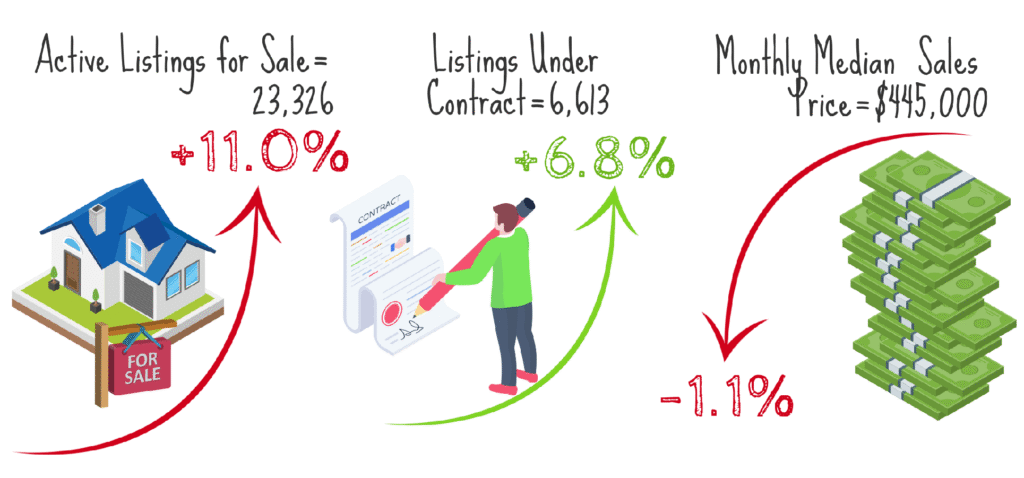
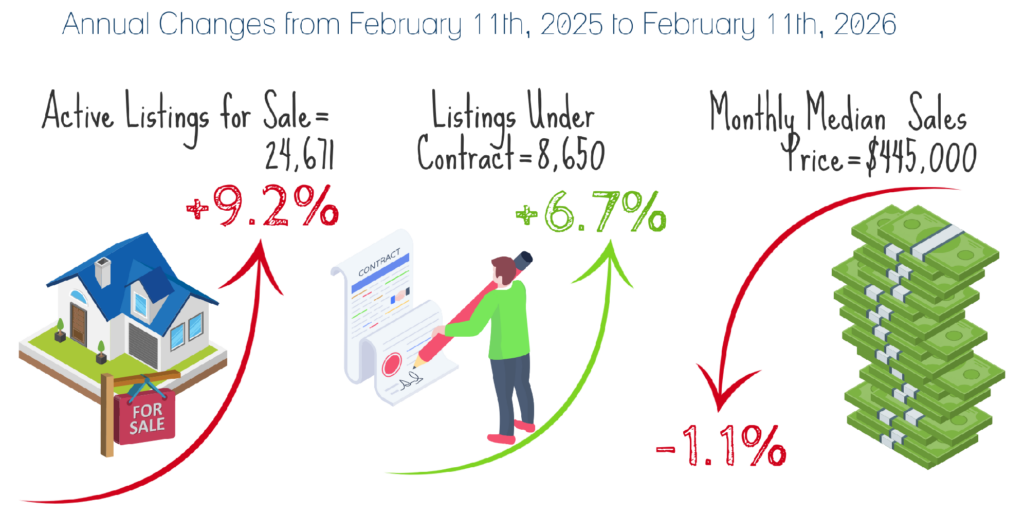
Contracts in Escrow up 7% Over Last Year
The Market is Better, but It’s Not Easy for Sellers
For Buyers
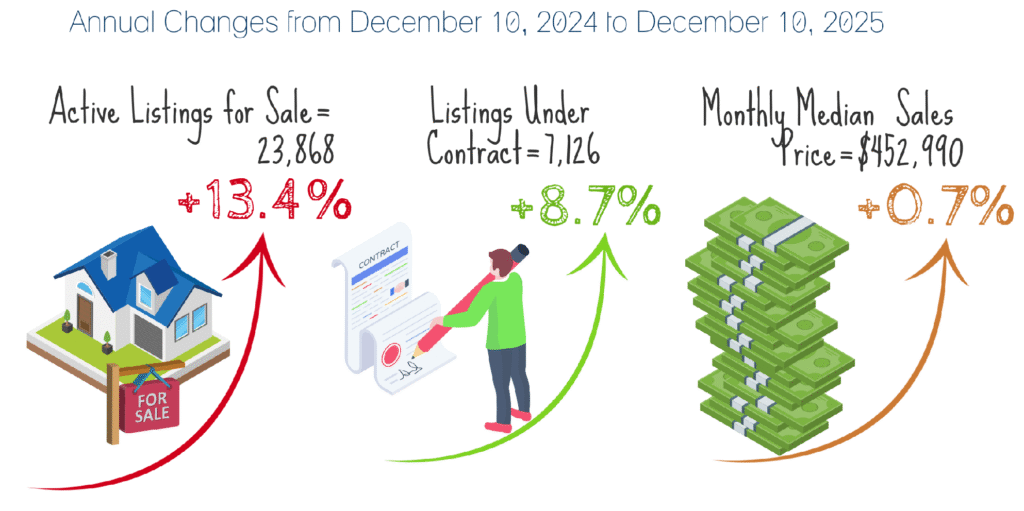
The home-buying season is entering its busiest time in Arizona, and so far contracts in escrow are 7% higher than this time last year and they’re expected to peak over the next 2-3 months. Currently, demand is considered 16% below normal for this time of year, but last August it was 24% below normal, so conditions have improved since rates dropped to the low 6% last September.
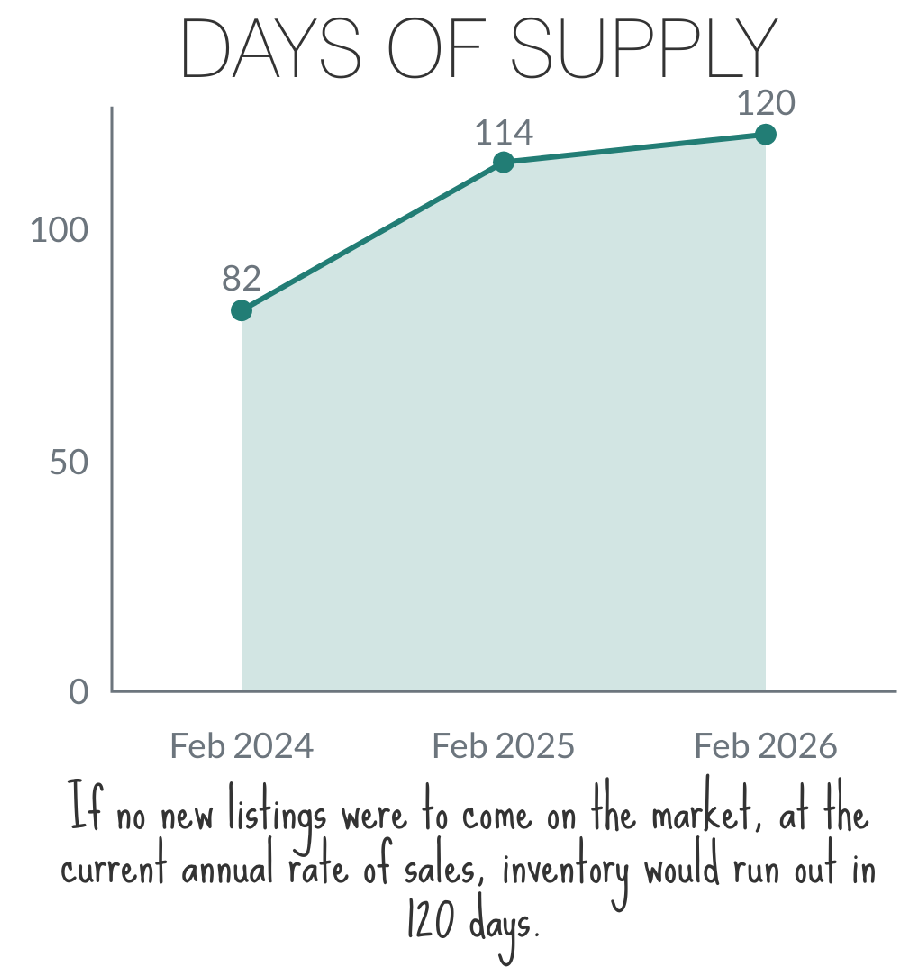
The current level of inventory for sale is considered normal for this time of year, which is a full recovery after 14 years of documented chronic undersupply in Greater Phoenix. Total inventory in the Arizona Regional MLS is up 9% over last year and combined with lower demand places the Valley in a slight buyer’s market overall, with large central cities in modest seller’s markets and growing cities on the outskirts in prolonged buyer’s markets.
Not all cities are below normal in demand. In fact, Apache Junction is 23% above normal for demand and normal for supply, ranking the city as the 4th strongest seller’s market for now. Many growing cities in buyer’s markets have normal levels of demand, but high supply. These cities include Buckeye, Gold Canyon, Goodyear, San Tan Valley, and Surprise, where annual sales have increased quickly over the past year as a growing number of buyers have taken advantage of attractive seller and builder incentives. Developers have responded by scaling back the number of permits to avoid prolonging the oversupply situation and encourage a more balanced market.
Bottom line, buyer demand is improving as conventional mortgage rates have remained stable in the low-6% range for nearly 6 months now; both FHA and ARMs are in the mid-5% range. Non-luxury home prices below $800K are down an average of 4% from last year. Every 0.1% drop in the mortgage rate is 1% off the principal and interest payment, and every 1% drop in price is another 1%, each equates to an extra $10 savings per $1,000 in payment. Combining the rate declines and price declines since this time last year, mortgage payments are down an average of 14% for median-priced homes, so a $2,500 payment quoted last year would be $350 less this year for the same home. For those buyers who are in a position to purchase a home, there is little advantage to delaying a purchase 3-6 months for prices or rates to decline further, as it may only save an extra $30 or less per month in payment.
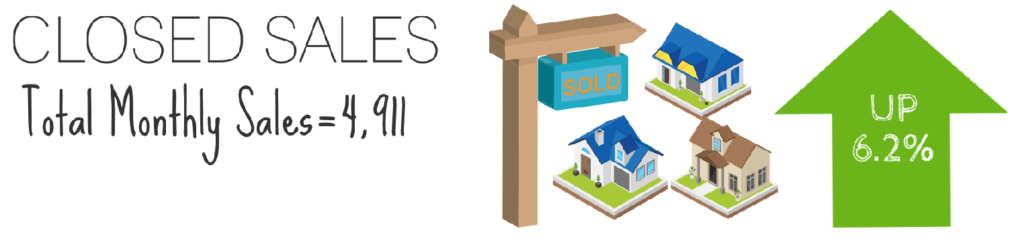
For Sellers
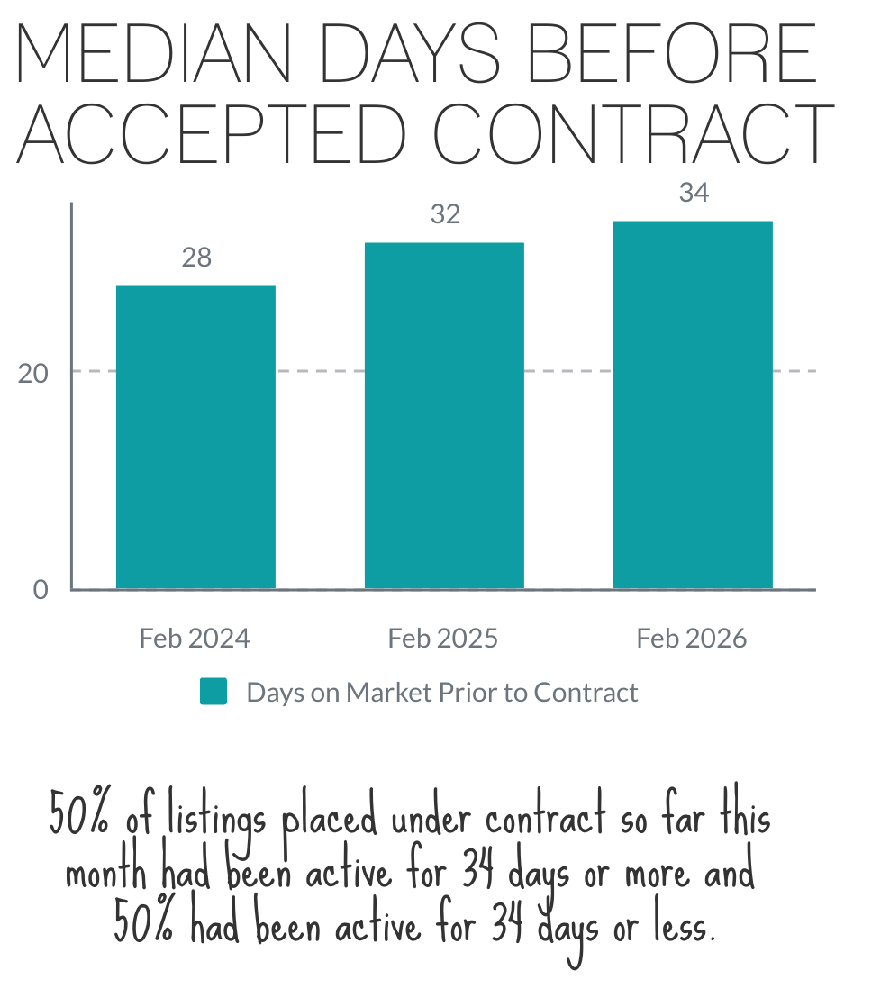
It’s business as usual for sellers. Professional advice last year is the same advice this year, but the market has improved compared to last summer. While January is the top month for luxury and retirement community listings to enter the market, March is the top month for mainstream sellers. These new listings create a surge of inventory in preparation for the peak contract months from February through May. This wave typically results in existing sellers lowering their asking prices to compete. It’s a cycle that repeats every year.
It’s natural for sellers to introduce their listings with prices that test the boundaries of what the market can bear. When transitioning from a seller’s market to a buyer’s market, buyers will increasingly refuse to engage at these elevated prices, ghosting the sellers until they bring their asking price within a desirable range. After more than a year of this behavior, sellers have become more moderate in their expectations at the onset, resulting in a 4% decline in early price reductions compared to last year. Once the list price comes within 2-3% of where the buyers believe it should be, then sellers increase their probability of an offer.
Buyers have become quite finicky, however, and aligning your price with existing comparable properties may not be enough. Proper price positioning today should focus on being the biggest “bang for the buck” in the buyer’s eyes instead of getting an extra dollar for every extra amenity and upgrade one has put into the home. Condition is important, offering a clean property that has been well-maintained with newer systems and few expensive projects for a buyer, combined with a competitive price, will aid in landing an offer.
While it seems reasonable to simply discount a home due to condition, this approach often fails in a buyer’s market. The extra money, effort, and time to bring a property up to par is often more than a buyer is willing to shoulder when there are other properties that don’t require the hassle. Sometimes providing a quote and a contractor who can perform the work right away, or even prior to close of escrow, can go a long way in addressing these concerns. Also, be aware of any new home developments that may be competing within 1-2 miles of your listing and within your price range, even if they’re not comparable in size or location, your potential buyer will be using them as a benchmark for condition, value, and incentives.
Commentary written by Tina Tamboer, Senior Housing Analyst with The Cromford Report
©2026 Cromford Associates LLC and Tamboer Consulting LLC